




Policy Tightens Amid Sticky Inflationary Pressures
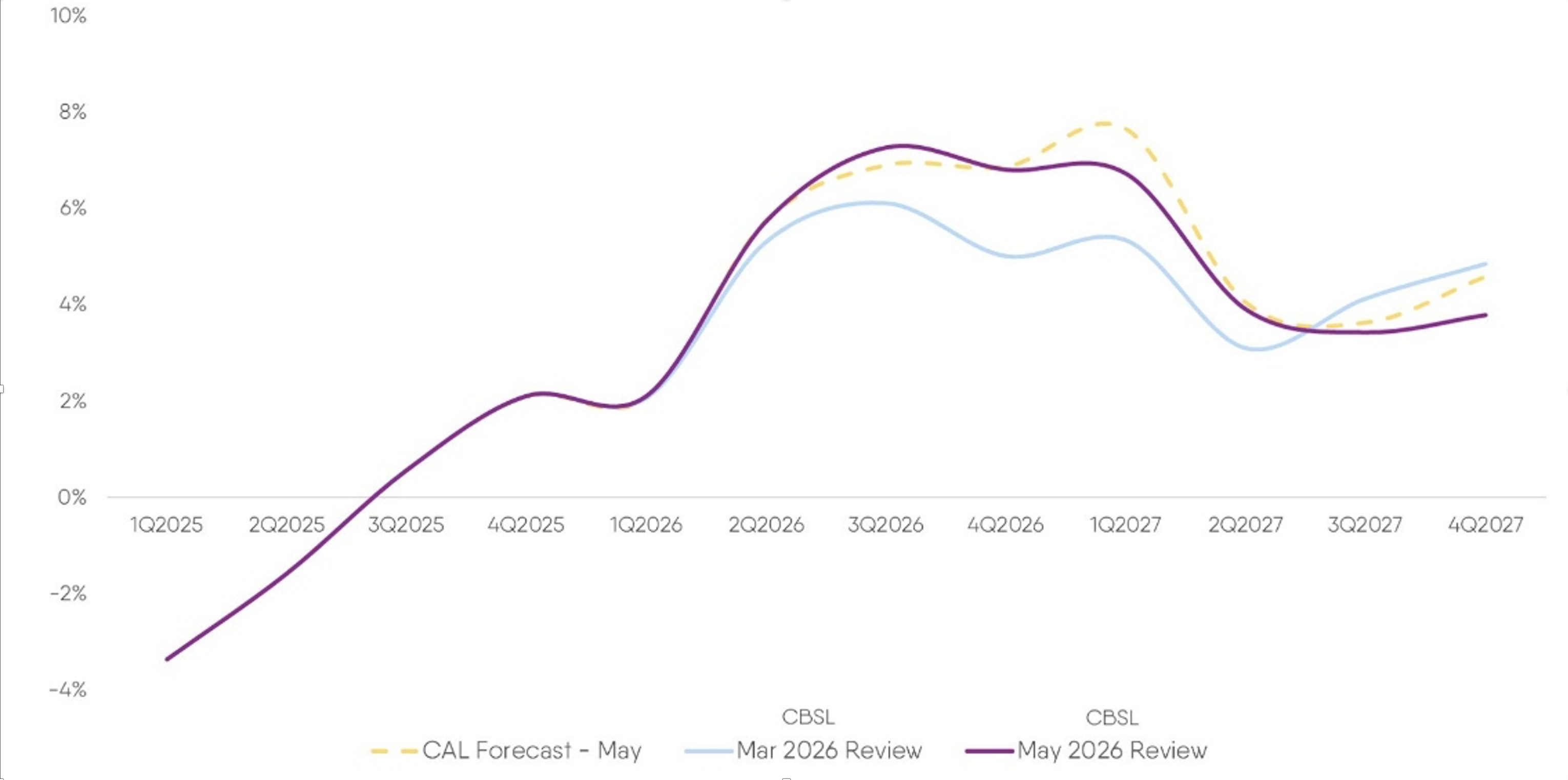
In a move that caught markets off guard, the CBSL raised the Overnight Policy Rate (OPR) by 100bps to 8.75% this week, marking the first major shift away from the accommodative stance that supported Sri Lanka’s early-stage recovery. Importantly, the decision was driven by the CBSL’s forward-looking inflation projections, which now point toward a more persistent period of price pressure, with inflation expected to remain above the 5% target over the next four quarters.
While the Middle East conflict continues to exert cost-push pressures via global energy prices, the CBSL explicitly flagged demand-side risks. Persistent private credit growth—particularly within SME lending, construction, vehicle leasing, and pawning—has continued to fuel import demand, risking a de-anchoring of inflation expectations.
Chart 1: Headline Inflation
Re-pricing the Yield Curve or Market Overreaction?
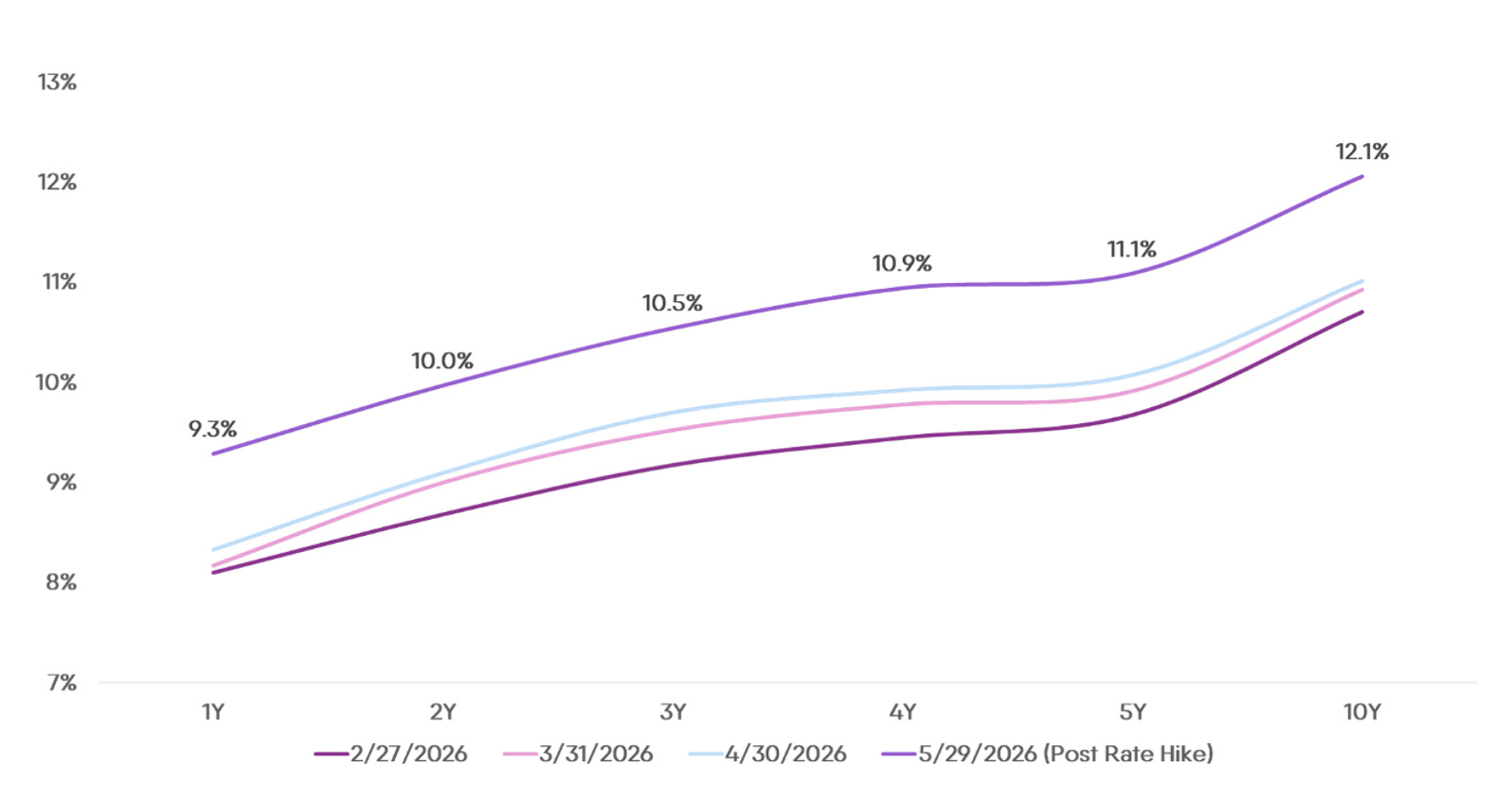
The policy tightening has reset expectations across the domestic fixed-income market, with Treasury bill yields adjusting sharply higher in the immediate aftermath. The 3-, 6-, and 12-month tenors rose by 118bps, 143bps, and 134bps week-on-week respectively, while secondary market yields turned more volatile.
Near-term dynamics will largely be shaped by liquidity conditions and the government’s financing behaviour. June represents one of the largest rollover months of the year, carrying a heavy LKR 1.2 tn maturity profile vs May’s LKR 992 bn. At the same time, recent auctions saw full acceptance at higher yield levels across T-bills and bonds – without the use of the strategic cash buffer – suggesting that the market’s initial knee-jerk reaction may have actually overshot the underlying 100bps hike.
Looking ahead, we do not anticipate further policy tightening in 2026E. As private-sector credit demand begins to cool under higher borrowing costs, monetary transmission pressures should ease, while the unutilized cash buffer remains available to cap volatility on rates.
Banks are already indicating a cautious approach to loan book growth amid heightened credit risk and tighter financial conditions. However, the rise in market interest rates should provide some offset through improved net interest margins (NIMs), supporting near-term sector profitability even as balance sheet growth slows.
Chart 2: Government Securities Yield Curve
FX: Speculative Panic vs. Structural Headwinds
The FX market saw one of its most volatile periods since the 2022 economic crisis, with the USD/LKR plummeting from 310 at end March to briefly touching LKR 354 before stabilising around LKR 330 levels. This reaction was driven primarily driven by importer panic-buying and speculative demand, which briefly disrupted interbank trading before CBSL swap injections and liquidity management normalized conditions.
However, the risk of depreciation in the LKR remains elevated given oil prices still remain above USD 90/bbl, while tourism earnings are also down 20% YoY since the start of the conflict, both of which reduce USD liquidity in the market.
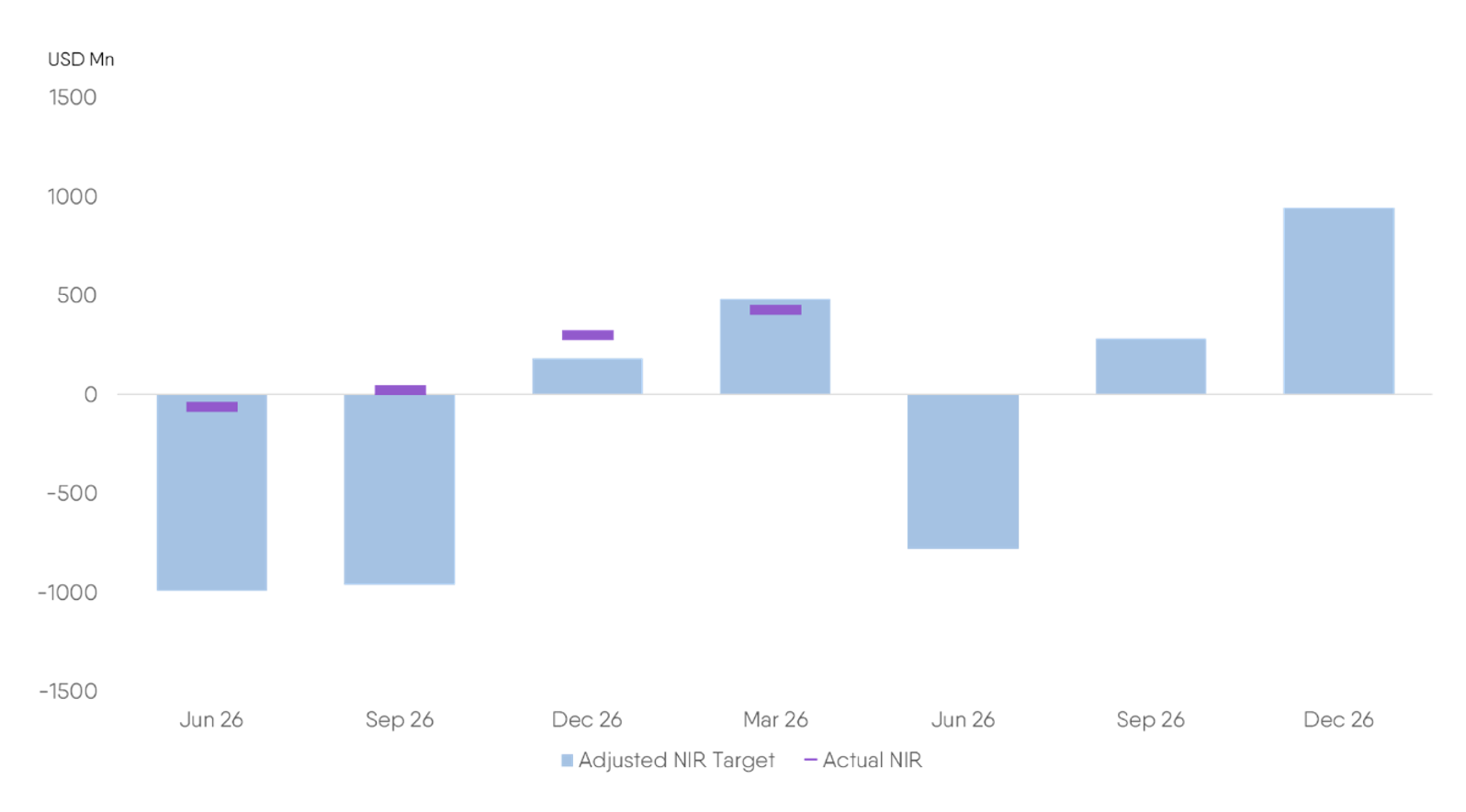
Additionally, the IMF’s end-2026E NIR (Net International Reserves) target— which is the amount of “usable” foreign reserves the CBSL must accumulate after accounting for short-term liabilities and swap obligations—stands at USD 944 mn, while current NIR is estimated to have turned negative, meaning that the CBSL will be a significant net buyer of the LKR, implying depreciation pressure will remain through the year.
IMF Targets: Revisions Provide Necessary Breathing Room
The silver lining comes from the newly wrapped 5th and 6th IMF reviews, where a practical recalibration of the EFF program targets has given policymakers some crucial breathing room.
| Target Metric | Previous Framework | Revised Framework | Impact |
|---|---|---|---|
| End-June NIR Floor | +USD 949 mn | -USD 778 mn | Defers reserve accumulation pressure to later in the year when current account dynamics improve. |
| Primary Surplus | 2.3% of GDP | 1.4% of GDP | Creates fiscal space for essential subsidies and capex. |
Despite the relaxed 1.4% IMF surplus target, CAL expects the actual fiscal outcome to outperform earlier expectations. This is primarily driven by:
- Infrastructure-related capex spending potentially being deferred due to rising import costs.
- Revenue collections continuing to exceed expectations.
Chart 3: NIR Targets vs. Actuals
The Bottom Line: A Narrowing Margin for Policy Error
The good news is that initial concerns surrounding the availability of essential imports such as fuel, coal, gas, fertilizer, and rice have largely subsided. Supply chains have remained resilient despite elevated global commodity prices, while food security concerns have eased with c.71,000 MT of rice imported in April and additional shipments expected in May, which implies a potential oversupply of rice.
At the same time, stronger-than-expected monsoon rains have supported hydro generation and improved reservoir levels, alleviating concerns over power shortages and the risk of load shedding.
While these developments reduce the likelihood of a supply-side shock in the near term, the focus must now stay on market-based pricing. Without market-driven price signals, consumption cannot adjust efficiently, risking an unsustainable surge in import demand at a time when the external sector is already under pressure.
Navigating this next phase successfully will depend entirely on the government’s ability to defend its hard-won fiscal gains while managing a significantly narrower margin for policy error.

 Find Us on Maps